

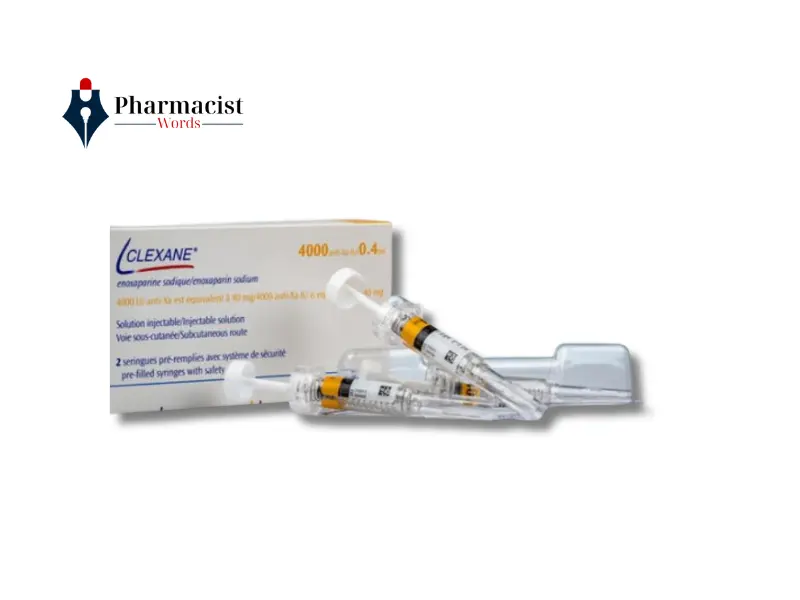
Requires Prescription (YES/NO): Yes
Generics: Enoxaparin Sodium
Used For: Prevention and treatment of blood clots (DVT, PE, ACS)
Class: Low Molecular Weight Heparin (Anticoagulant)
Clexane contains Enoxaparin, an anticoagulant that works by enhancing the activity of antithrombin III, which inhibits clotting factors (Factor Xa and IIa). This prevents the formation of new blood clots and stops existing ones from growing, reducing the risk of deep vein thrombosis (DVT), pulmonary embolism (PE), and heart attack (ACS).
Dosage (general guidance – doctor decides exact dose):
Prevention of DVT (e.g. after surgery): 20–40 mg once daily subcutaneous injection.
Treatment of DVT/PE: 1 mg/kg every 12 hours, or 1.5 mg/kg once daily.
Acute Coronary Syndromes (ACS): 1 mg/kg every 12 hours with aspirin.
(Never self-inject without medical supervision.)
Side Effects:
Common: Bruising at injection site, mild bleeding, pain/swelling.
Serious: Severe bleeding, low platelet count (heparin-induced thrombocytopenia), allergic reactions, osteoporosis (long-term use).
Drug Interactions:
Other anticoagulants (warfarin, rivaroxaban) → ↑ bleeding risk
Antiplatelets (aspirin, clopidogrel) → ↑ bleeding risk
NSAIDs (ibuprofen, diclofenac) → ↑ stomach bleeding risk
Herbal medicines (ginkgo, garlic, ginger in high doses) → ↑ bleeding tendency
Clexane is used for:
Preventing blood clots in patients undergoing surgery or immobilized in hospital.
Treating deep vein thrombosis (DVT) and pulmonary embolism (PE).
Preventing clot formation in unstable angina and myocardial infarction (heart attack).
Protecting dialysis circuits from clotting.
Do not use Clexane if you have:
Allergy to enoxaparin, heparin, or pork-derived products.
Active major bleeding.
Heparin-induced thrombocytopenia (HIT).
Severe uncontrolled hypertension.
Active stomach ulcer or brain hemorrhage.
Severe kidney failure (unless dose adjusted by doctor).
Recent surgery of the spine, brain, or eye.
Monitor platelet count during therapy to detect HIT early.
Use cautiously in patients with liver disease, kidney disease, or bleeding disorders.
Elderly patients may be at higher bleeding risk.
Rotate injection sites to avoid bruising.
Avoid activities that may cause injuries.
Warning 1: Risk of serious or fatal bleeding if used with other blood thinners.
Warning 2: May cause spinal/epidural hematoma if used with spinal anesthesia → can lead to paralysis.
Warning 3: Not a substitute for routine coagulation monitoring, but dose adjustment may be required in renal impairment.
Category B: Considered relatively safe in pregnancy when prescribed. Often used for clot prevention in pregnant women with clotting disorders.
Passes minimally into breast milk – consult doctor before breastfeeding.
Store at room temperature (below 25°C).
Do not freeze.
Keep in original packaging and out of children’s reach.